















- 提交
- 發送報價請求
- submit
- 發送報價請求
Unveiling the Truth About Eco-Friendly Drink Bottles: The Actual Environmental Benefits of PLA, Bamboo, and Paper Materials, Plus a Look at Emerging Innovative Materials | Eco-Product Review Expert
Feb 03,2026

The Current State of the Eco-Friendly Drinking Bottle Market: The Truth Behind the Labels
Hong Kong generates over 3 million plastic waste items every day, among which beverage cups account for a significant proportion. As a result, the market for eco-friendly beverage cups is booming, with a flood of products—such as those made from PLA, bamboo fiber, and paper—that tout their environmental friendliness. However, do these so-called “eco-friendly” beverage cups truly live up to environmental expectations?
According to data from the Environmental Protection Department, currently only about 20% of organic waste in Hong Kong can be composted; most so-called “biodegradable” beverage cups ultimately still end up in landfills. This reality reminds us that choosing eco-friendly beverage cups requires a more scientific and rational analysis.
Consumers are often attracted by labels such as “biodegradable” and “natural materials,” yet they tend to overlook the actual conditions of use and disposal methods. A truly environmentally friendly assessment needs to take into account the entire lifecycle, including stages such as the production process, product lifespan, and waste management.
This article will take an in-depth look at the actual performance of mainstream eco-friendly drinking bottles on the market, helping consumers make more informed choices.
The PLA Drinking Straw Myth: Seemingly Perfect Yet Restrictive
Polylactic acid (PLA) drinking straws are hailed as the most ideal eco-friendly choice, made from plant-based raw materials such as corn starch and theoretically fully biodegradable under industrial composting conditions. However, the reality is far more complex than one might imagine.
Industrial composting dependency This is the biggest limitation of PLA drinking straws. PLA can only effectively decompose in high-temperature industrial composting facilities at 60–70°C; under ordinary household composting conditions or in natural environments, its decomposition is extremely slow and may take several years. Currently, Hong Kong lacks well-developed industrial composting facilities, meaning that most PLA drinking straws cannot achieve their intended environmental benefits.
Temperature resistance is also a challenge for PLA drinking cups. PLA begins to deform when exposed to temperatures above 50°C, making it unsuitable for holding hot beverages and thus limiting its practicality. As a result, PLA drinking cups can only be used for cold or lukewarm drinks and cannot fully replace the functionality of conventional drinking cups.
The carbon footprint of the production process also cannot be overlooked. PLA production requires substantial energy and relies on agricultural crop-based raw materials, raising concerns about competition with food crops for land resources. Although the material itself is biodegradable, the environmental impacts of the production process need to be comprehensively assessed.
Bamboo Drinking Straw Challenge: Potential Risks of Natural Materials
Bamboo fiber drinking straws are popular for their natural appearance and antibacterial properties, but they actually face quite a few challenges in practical use. While bamboo itself does possess inherent antibacterial qualities, the chemical agents added during processing can potentially undermine this advantage.
Mold Risk This is a major concern regarding bamboo drinking straws. Bamboo’s porous structure readily absorbs moisture, and if not thoroughly cleaned or stored improperly, it can easily become a breeding ground for mold. Additionally, the waterproof coating on some bamboo drinking straws may also serve as a perfect environment for bacterial growth, posing risks to users’ health.
In terms of durability, bamboo drinking straws are relatively fragile and prone to cracking upon impact or exposure to temperature changes. Repeated cleaning can accelerate their aging process, resulting in a shorter lifespan compared to other materials. This means they need to be replaced more frequently, thereby increasing the environmental burden.
Quality control is also a major challenge. Bamboo drinking straws from different manufacturers vary significantly in terms of processing techniques and the use of additives, making it difficult for consumers to assess the actual quality and safety of these products. It is recommended to choose products with clearly recognized certification marks, such as FDA or EU food safety certifications.
The paper straw issue: seemingly simple yet complex.
Paper drinking straws may seem like the simplest eco-friendly choice, but in reality, they pose complex technical challenges. To prevent liquids from seeping through, most paper drinking straws require a coating treatment.
Brewing Stability and Adhesive Issues This is a key flaw of paper drinking straws. Traditional paper drinking straws use a polyethylene (PE) coating, which, while waterproof, cannot be recycled. Although the new bio-coating claims to be biodegradable, its effectiveness is limited within Hong Kong’s waste management system.
Prolonged soaking can cause the paper drink cups to become loose, especially when used for acidic or hot beverages. This not only affects the user experience but may also lead to the leaching of harmful substances. Some low-quality paper drink cups use inferior adhesives, posing food safety risks.
Recycling also faces challenges. Separating the coating from the paper requires specialized techniques that are difficult for most recycling facilities to handle. Even if separation is possible, the recyclability of the paper is significantly reduced due to contamination.
Emerging Material Trends: Breakthroughs in Algae-Based and Wheat-Straw Materials
Faced with the limitations of traditional eco-friendly materials, scientists are developing more innovative solutions. Algae-based materials are among the most promising options.
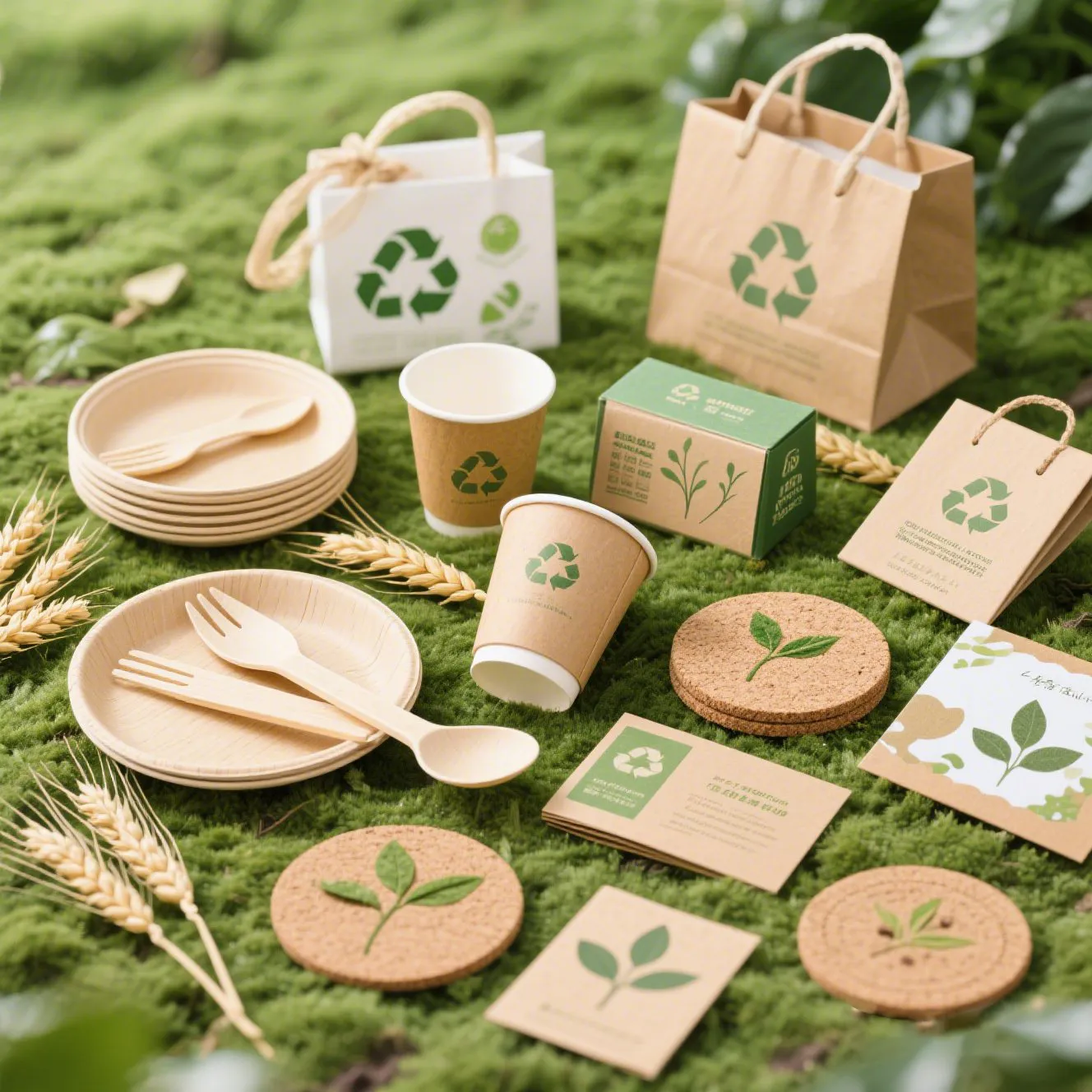
Seaweed-based drinking straw Made from marine plants such as brown algae and red algae, it boasts excellent biodegradability. In a marine environment, it can fully decompose within just a few weeks—and can even serve as food for marine organisms. More importantly, seaweed cultivation does not require freshwater or agricultural land, thus avoiding competition with food production.
Wheat straw material This approach makes full use of agricultural waste by converting wheat straw—previously burned—into useful packaging materials. This circular economic model not only addresses the issue of agricultural waste but also creates environmentally friendly products, achieving dual environmental benefits.
Other innovative materials, such as mushroom mycelium and bagasse, are also in the development stage, and we can expect more groundbreaking products to emerge in the coming years. A common characteristic of these materials is their true biodegradability, lower energy consumption during production, and positive impact on the environment.
Rational Choice: There Is No Perfect Single Solution.
After careful analysis, we found that there is no single perfect solution for eco-friendly drinking containers. Each material has its own advantages and limitations; the key lies in making a rational choice based on the specific usage scenario and local waste management facilities.
In regions with well-developed industrial composting facilities, PLA drinking straws may be the best choice; in settings that prioritize natural materials, appropriately treated bamboo drinking straws can still be considered; and paper drinking straws are suitable for short-term use in environments with robust recycling systems.
However, all analyses point to the same core principle: Reuse over disposable A high-quality stainless steel or glass drinking bottle—though the material itself isn't biodegradable—can deliver far greater environmental benefits than any single-use eco-friendly drinking bottle when used repeatedly over a long period.
When making choices, consumers should prioritize the durability and reusability of products, with the biodegradability of materials coming second. Supporting local environmental policies and participating in proper waste sorting and recycling are also crucial steps toward achieving true environmental sustainability.
The future development of eco-friendly drinking containers will move toward greater intelligence and sustainability. Consumers, businesses, and governments need to work together to establish a comprehensive circular economy system in order to truly achieve environmental protection goals.
Related News
2026-02-03
Discover how the finance, insurance, and real estate industries are leveraging custom thermos cups to build customer relationships and enhance their brand image. Expert analysis of industry-specific temperature-based marketing strategies—helping you create unique corporate gift solutions.
2026-02-03
A Practical Guide for Hong Kong Foodservice Operators: A Detailed Analysis of Eco-Friendly Drinking Straw Material Selection, Cost Control, and Customer Communication Strategies. Help you intelligently adopt eco-friendly drinking straws, enhancing your brand image while delivering a superior customer experience.
2026-02-03
A professional, personalized guide to selecting eco-friendly drinking bottles—offering purchasing advice and customized solutions for takeaway enthusiasts, camping aficionados, and corporate users. Includes comprehensive information on portable designs, cleaning kits, corporate gifts, and more.
2026-02-03
Conduct an in-depth analysis of the actual environmental benefits of PLA, bamboo, and paper eco-friendly drinking straws; debunk common misconceptions; explore emerging material trends such as algae-based and wheat-straw materials; and provide scientifically objective recommendations for environmentally friendly choices.
All Product Categories












All Product Categories
Payment Methods:


We are happy to assist you with any questions regarding gift purchases


